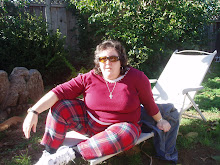
In those dark moments
When eyesight doesn’t matter
Where light burns and stars stay undiscovered
The grip of the handle
Eases the panic like a mother’s hand
Before the fear rises
Warm nose finds the way down the hall, up the stairs, into the store
Like the familiar sounds of morning
The light click of toenails on tile reassures
I grip the handle and follow
the soft jingle of leather and brass
and faint canine scent
conveys that
in those darkest moments
I am not alone.
Sunday, February 7, 2010


Sunday, January 24, 2010
The First Year
The First Year
Buy Ann Chiappetta
January 2009-january 2010
It is a brisk autumn day; rich aromas of wet leaves mixed with wood smoke greet us as we approach the corner south of our home. My guide dog, Verona, stops a few inches from the curb and turns toward me, indicating there is an obstacle other than the step down to the street. I put out my tow and hear the splash of water. I probe a bit more and realize it’s a large puddle, filled with debris from the rain from the previous night’s storm.
“Good girl. Forward. ” I say and give the hand signal.
She backs us up, then turns right, taking us on to the grass, avoiding the huge puddle. She stops at the edge of the opposite sidewalk.
“Good dog.” I say, praising her before moving on to our destination.
The above description is just a typical moment for us. We work well together, and after our first year of teamwork, our mistakes are few and minor. How do we do it? Well, I can’t read my dog’s mind, but I do read her body language. The movements are given to me through the harness handle, much like the reins of a horse. Suffice it to say that the stiff handle provides her with a way to tell me where to go. I, too, can get my point across through the handle. The use of a leash and voice and hand commands are also other means of communicating when working with a guide dog. When the dance is done well, the feeling of freedom is remarkable.
How I’ve learned the dance and made the transition from a cane user to a guide dog handler is an odyssey of sorts, beginning with some dark moments. I didn’t become profoundly visually impaired until after I graduated from a master’s program in the spring of 2007 at the age of 38. In 1993 I was diagnosed with retinitis pigmentosa and declared legally blind. Then, in late 2007 the ophthalmologist discovered advanced macular degeneration in my right eye. I was now down to less then five degrees of vision. It was then that I finally put some serious thought into applying for a dog
Years ago, before I went to graduate school, someone asked me if I thought I’d ever give up my cane for a dog. I told them that, no, I didn’t have what it takes to work with a guide dog. Back then, my confidence was low and I wasn’t ready for blindness, let alone a guide dog and the responsibility that came with it. I was also under the impression that guide dog users had to be totally blind, or close to it, which at the time, I wasn’t. I was a low partial, using what sight I could when I could.
I’m not even sure when my perceptions changed but I know as my vision worsened, my curiosity about using a guide dog increased. One of the mitigating factors was that I struggled to maintain an active, independent lifestyle. I was raising a family and pursuing a master’s degree. I routinely struggled with many things, including losing more and more of my vision while studying and participating in campus life. It was at those times, when I felt the most frustration that I wished for a dog. Once, while navigating through a parking lot at night, I almost lost my cane down a sewer grate and stumbled, dropping my book bag into a puddle. Humiliated and wet from the rain, I picked up my wet bag and managed to extricate my cane from the grate without breaking the tip. I thought, if I had a dog, that wouldn’t have happened. another time I was tapping my way down the street to the college library and walked right into a saw horse. My cane slipped under it and I almost flipped right over it. It is moments like that which compelled me to apply for a dog.
Three years after the saw hoarse incident, I get the news: I’m going into the January 2009 class at Guiding Eyes for the Blind in Yorktown Heights, New York. Practically in my own backyard and rated one of the best schools in the world, it is my first choice and I am excited and relieved to be accepted. The elation I feel is similar to that of being accepted into graduate school or winning the lottery. I know that once I make it through training, my life will change for the better. I’m ready for whatever lays ahead.
I begin packing right after Christmas. The only thing concerning me about is how my 13 year old daughter and pet dog will handle my month-long absence. The former is very attached to me and the latter pines for me whenever I’m gone for more than an hour. My husband and son have their work cut out for them, for sure. Somehow, phone calls and a few short visits must suffice. My husband and I both know I need to do this in order for my life and career to successfully progress; this was another sacrifice with its hidden merits. My family wanted to see me become more independent and in order for this to happen, I had to commit to the 26 day training away from home.
I report to the training residence program on January 2, 2009, not sure what to expect thankfully, the class supervisor finds me in the lobby and introduces me to one of our class instructors who shows me to my room. The orientation and friendly manner of the staff relaxes me and soon I am unpacked and ready to meet my other classmates.
Day one and two introduces us to the daily routine we will follow for the next twenty six days: a wake up call at six a.m., then breakfast. Mid-morning we ride to the actual location where we train in downtown White Plains, New York. It is here that we are given pre-dog evaluations, called Juno walks, and lunch. After the evaluations are completed, we drive back up to the main campus for dinner and lectures.
Day three is dog day. When lunch is over, we’re told to go to our rooms and wait for one of the trainers to bring us our new dog. The night before we find out the names of our dogs by playing a guessing game. One of my classmates gets a dog with the same name as his ex-wife. Another woman, who already has a penchant for shopping even while at guide dog school, finds out her new dog’s name is Visa. It seems to me that we each are given a dog with a name that suits us. My dog’s name is Verona. What a great name to go with my Italian surname. I can’t help smiling. It just sounds so good together.
Later, in my room, I fidget and pace; what color is she? How big is she? Will she like me? Will I be able to trust her? Part of me knows the questions are just the symptoms of nerves and waiting for that knock. What I didn’t know was that once my dog put her big, glossy head in my lap, my life would be forever changed and blessed by a loving, loyal, companion.
She quickly earns my respect; she is obedient, affectionate, and all business when in harness. On the second day of a training walk, she prevents me from being hit by a car backing into the crosswalk by pulling me out of the way. When I discover what she has just done, I want to cry. I take a breath and praise her, feeling more confident than just a few hours ago. She kept me safe, and now it is my turn to learn how to let her do her job.
That was the turning point for me. Verona proved her intelligence and soon we were learning how to work together. Some new students like me had similar experiences. New teams seem to need a situation like a traffic check to bond them and to increase the mutual trust. Verona and I were, for the most part, typical and for that I was grateful.
Our most challenging training experience was my clumsiness taking left turns. I’d stepped on her paws twice in one training walk and to avoid me, Verona would swing away from me. I got so frustrated that I started to cry right there on the street. The instructor comforted me and got me going again. That evening I went for extra training and eventually we overcame our turning snag.
I had to keep my steps small and go with her and the mantra, “baby steps” is always a reminder to not overstep my boundaries.
I’ve also discovered Verona loves to visit the children’s hospital. I volunteer once a month and make presentations to the school program for medically fragile children ages K-12. Ten minutes before we end the presentation, I take off her harness, do some obedience, then heel her around the room so the kids can pet and meet her. I even taught her to jump onto a bench so one child could pet her from his hospital bed.
She’s provided me with a much better sense of self-discipline, too. We have a rigid feeding, walking, and training/exercise schedule that only varies slightly when either on vacation or inclement weather. We are always traveling and I even find my anxiety about going to unfamiliar places has lessened. Her ability to instill confidence at times when I need it most is probably her best attribute. She takes charge in crowds, stores, and when we find ourselves faced with an obstacle that isn’t easily solved.
What I mean is that because of Verona, I have developed a routine which supports our relationship in many positive ways. The dark moments are far fewer now; I no longer fear unseen sewer grates, saw horses, holes, stairs, and low hanging branches and signs. With Verona at my side, my ability to do more is multiplied. I reflect back on that horrible night when I dropped my bag into the puddle and can now say with certainty that the situation was the first stumble to the path of obtaining a guide dog. People with disabilities are faced with independence challenges every day and having Verona avoids the stress and frustration of these challenges for me. She brings balance to my life that no inanimate object, like a white cane, ever could. From now until her retirement, the dark moments will be replaced by the bright light and companionship of my partner, Verona.
Buy Ann Chiappetta
January 2009-january 2010
It is a brisk autumn day; rich aromas of wet leaves mixed with wood smoke greet us as we approach the corner south of our home. My guide dog, Verona, stops a few inches from the curb and turns toward me, indicating there is an obstacle other than the step down to the street. I put out my tow and hear the splash of water. I probe a bit more and realize it’s a large puddle, filled with debris from the rain from the previous night’s storm.
“Good girl. Forward. ” I say and give the hand signal.
She backs us up, then turns right, taking us on to the grass, avoiding the huge puddle. She stops at the edge of the opposite sidewalk.
“Good dog.” I say, praising her before moving on to our destination.
The above description is just a typical moment for us. We work well together, and after our first year of teamwork, our mistakes are few and minor. How do we do it? Well, I can’t read my dog’s mind, but I do read her body language. The movements are given to me through the harness handle, much like the reins of a horse. Suffice it to say that the stiff handle provides her with a way to tell me where to go. I, too, can get my point across through the handle. The use of a leash and voice and hand commands are also other means of communicating when working with a guide dog. When the dance is done well, the feeling of freedom is remarkable.
How I’ve learned the dance and made the transition from a cane user to a guide dog handler is an odyssey of sorts, beginning with some dark moments. I didn’t become profoundly visually impaired until after I graduated from a master’s program in the spring of 2007 at the age of 38. In 1993 I was diagnosed with retinitis pigmentosa and declared legally blind. Then, in late 2007 the ophthalmologist discovered advanced macular degeneration in my right eye. I was now down to less then five degrees of vision. It was then that I finally put some serious thought into applying for a dog
Years ago, before I went to graduate school, someone asked me if I thought I’d ever give up my cane for a dog. I told them that, no, I didn’t have what it takes to work with a guide dog. Back then, my confidence was low and I wasn’t ready for blindness, let alone a guide dog and the responsibility that came with it. I was also under the impression that guide dog users had to be totally blind, or close to it, which at the time, I wasn’t. I was a low partial, using what sight I could when I could.
I’m not even sure when my perceptions changed but I know as my vision worsened, my curiosity about using a guide dog increased. One of the mitigating factors was that I struggled to maintain an active, independent lifestyle. I was raising a family and pursuing a master’s degree. I routinely struggled with many things, including losing more and more of my vision while studying and participating in campus life. It was at those times, when I felt the most frustration that I wished for a dog. Once, while navigating through a parking lot at night, I almost lost my cane down a sewer grate and stumbled, dropping my book bag into a puddle. Humiliated and wet from the rain, I picked up my wet bag and managed to extricate my cane from the grate without breaking the tip. I thought, if I had a dog, that wouldn’t have happened. another time I was tapping my way down the street to the college library and walked right into a saw horse. My cane slipped under it and I almost flipped right over it. It is moments like that which compelled me to apply for a dog.
Three years after the saw hoarse incident, I get the news: I’m going into the January 2009 class at Guiding Eyes for the Blind in Yorktown Heights, New York. Practically in my own backyard and rated one of the best schools in the world, it is my first choice and I am excited and relieved to be accepted. The elation I feel is similar to that of being accepted into graduate school or winning the lottery. I know that once I make it through training, my life will change for the better. I’m ready for whatever lays ahead.
I begin packing right after Christmas. The only thing concerning me about is how my 13 year old daughter and pet dog will handle my month-long absence. The former is very attached to me and the latter pines for me whenever I’m gone for more than an hour. My husband and son have their work cut out for them, for sure. Somehow, phone calls and a few short visits must suffice. My husband and I both know I need to do this in order for my life and career to successfully progress; this was another sacrifice with its hidden merits. My family wanted to see me become more independent and in order for this to happen, I had to commit to the 26 day training away from home.
I report to the training residence program on January 2, 2009, not sure what to expect thankfully, the class supervisor finds me in the lobby and introduces me to one of our class instructors who shows me to my room. The orientation and friendly manner of the staff relaxes me and soon I am unpacked and ready to meet my other classmates.
Day one and two introduces us to the daily routine we will follow for the next twenty six days: a wake up call at six a.m., then breakfast. Mid-morning we ride to the actual location where we train in downtown White Plains, New York. It is here that we are given pre-dog evaluations, called Juno walks, and lunch. After the evaluations are completed, we drive back up to the main campus for dinner and lectures.
Day three is dog day. When lunch is over, we’re told to go to our rooms and wait for one of the trainers to bring us our new dog. The night before we find out the names of our dogs by playing a guessing game. One of my classmates gets a dog with the same name as his ex-wife. Another woman, who already has a penchant for shopping even while at guide dog school, finds out her new dog’s name is Visa. It seems to me that we each are given a dog with a name that suits us. My dog’s name is Verona. What a great name to go with my Italian surname. I can’t help smiling. It just sounds so good together.
Later, in my room, I fidget and pace; what color is she? How big is she? Will she like me? Will I be able to trust her? Part of me knows the questions are just the symptoms of nerves and waiting for that knock. What I didn’t know was that once my dog put her big, glossy head in my lap, my life would be forever changed and blessed by a loving, loyal, companion.
She quickly earns my respect; she is obedient, affectionate, and all business when in harness. On the second day of a training walk, she prevents me from being hit by a car backing into the crosswalk by pulling me out of the way. When I discover what she has just done, I want to cry. I take a breath and praise her, feeling more confident than just a few hours ago. She kept me safe, and now it is my turn to learn how to let her do her job.
That was the turning point for me. Verona proved her intelligence and soon we were learning how to work together. Some new students like me had similar experiences. New teams seem to need a situation like a traffic check to bond them and to increase the mutual trust. Verona and I were, for the most part, typical and for that I was grateful.
Our most challenging training experience was my clumsiness taking left turns. I’d stepped on her paws twice in one training walk and to avoid me, Verona would swing away from me. I got so frustrated that I started to cry right there on the street. The instructor comforted me and got me going again. That evening I went for extra training and eventually we overcame our turning snag.
I had to keep my steps small and go with her and the mantra, “baby steps” is always a reminder to not overstep my boundaries.
I’ve also discovered Verona loves to visit the children’s hospital. I volunteer once a month and make presentations to the school program for medically fragile children ages K-12. Ten minutes before we end the presentation, I take off her harness, do some obedience, then heel her around the room so the kids can pet and meet her. I even taught her to jump onto a bench so one child could pet her from his hospital bed.
She’s provided me with a much better sense of self-discipline, too. We have a rigid feeding, walking, and training/exercise schedule that only varies slightly when either on vacation or inclement weather. We are always traveling and I even find my anxiety about going to unfamiliar places has lessened. Her ability to instill confidence at times when I need it most is probably her best attribute. She takes charge in crowds, stores, and when we find ourselves faced with an obstacle that isn’t easily solved.
What I mean is that because of Verona, I have developed a routine which supports our relationship in many positive ways. The dark moments are far fewer now; I no longer fear unseen sewer grates, saw horses, holes, stairs, and low hanging branches and signs. With Verona at my side, my ability to do more is multiplied. I reflect back on that horrible night when I dropped my bag into the puddle and can now say with certainty that the situation was the first stumble to the path of obtaining a guide dog. People with disabilities are faced with independence challenges every day and having Verona avoids the stress and frustration of these challenges for me. She brings balance to my life that no inanimate object, like a white cane, ever could. From now until her retirement, the dark moments will be replaced by the bright light and companionship of my partner, Verona.
Thursday, December 24, 2009
They're Not Rin-Tin-Tin: debunking the guide dog myth
They’re Not Rin-Tin-Tin: debunking the guide dog myth
By Ann Chiappetta
I’m a first-time dog guide handler, and, as such, I haven’t attained the broken-in status of the seasoned handlers, who can somehow avoid impromptu conversations about their dogs while in public. Truth be told, I envy handlers who have attained the ability to go unnoticed. For some reason, I’m not one of them, and most likely will never attain the quiet dignity they’ve acquired when working their dogs.
I’ve concluded that my role is that of the informant, the guide dog ambassador. For now, at least, it suits me and my dog, as we’re both social creatures, thriving on interactions with both humans and canines.
There are, of course, inaccuracies and mis-information not just about blind people but also guide dog users and their dogs. I refer to the unrealistic assumptions of the un-indoctrinated general public as the Rin-Tin-Tin Myth, reflecting the fictional, super dog named in the 1950s adventure series. For those who do remember the show, is it any wonder the first successful guide dog team was comprised of a blinded Veteran and a German Sheppard dog? Aside from the coincident, for many years the German Sheppard Dog was the poster dog for the blind. The introduction of other working breeds, such as the now popular Labrador retriever, has both helped and hindered handlers. For the most part, Shepards look intense and dignified. They are ever watchful, work hard, and can be protective. On the other paw, Labradors are better able to relax, cop a snooze, and love anyone with food. Both breeds are great guides due to their work drive and desire to please their handler. Let’s not forget the many other breeds of dogs that are also successfully trained for guide work. Golden Retrievers, Dobermans, Collies, and Boxers are only a few I’ve met that are part of a successful working team.
Keeping all this in mind, I do my best to debunk the mythology of working a guide dog. Sure, breeds differ in some respects, and I don’t just refer to the physical differences. For example, most Labradors can be easily trained with food rewards whereas many a Shepard cannot be convinced with even the most enticing treat. Does it mean one is better than the other? No. Fortuneately, Training methods have evolved with us and our dogs, making it much easier to train both breeds effectively.
I think the general public needs to know what’s appropriate and what isn’t if and when one should come into contact with a working team. So far, I’ve had some strange interactions, like a baby in a carriage pulling my dog’s tail. When I turned to ask what was going on, the adult acted like I wasn’t even there. Once I crossed the street, a Good Samaritan caught up to me and told me what happened. I laughed and thanked him. My dog was tested that time, that’s for sure. She passed with flying colors.
I don’t, of course, have to take the time to educate folks; many handlers choose not to engage in these conversations because it becomes repetitive and burdensome when you just want to go about your business. There are times, however, when a comment from someone is so off-base, I am compelled to take on the role of guide dog debunker.
The most amusing questions are:
1. How does your dog know how to cross the street? I thought dogs were color blind.
This one always makes me laugh; I tell them I have to know when it’s safe and give my dog the command to go with the traffic flow. If a car blocks our path or puts us in danger, my dog will act accordingly and get us out of harms’ way.
The second most frequent comment:
2. Is he/she training?
I always answer, she’s working now, and her training is over.
The third most frequently asked question:
3. Can I pet your dog?
My reply: Please don’t pet her, she’s working. Thanks for asking first.
The next one:
How do you get a guide dog? I want to say, “You got to be blind, you dummy”, but I just smile and say there are at least ten training schools in the United States and Canada and they can all be found via the Internet.
So, going out in public really puts my people skills to the test, just as it puts Verona’s guiding skills to the test. But it’s certainly better than sitting at home.
Incidentally, Verona will be three years old on 11/24. Our one year anniversary is on January 5, 2010. Writing about our trips illustrates how much my life has changed and has been enriched since meeting and training with her. I have a better sense of belonging, a feeling of freedom I never thought I could ever regain after losing my sight.
Due to the intense on-campus training I underwent at guiding Eyes for the Blind, I’ve found other folks who live like me, and that is comforting whenever I feel overwhelmed by my disability. I am part of another family who will follow and support me as long as I am part of a guide dog team and willing to take part in the mission to stay active, independent, and live life to the fullest.
Some folks have asked me what other roles my new dog assumes when she isn’t working. My dog helps me gain control of my life. She quells the anxiety I often feel when traveling to unfamiliar places by guiding me and keeping me safe. She is my constant companion, sharing my life at home, work, and vacation. That alone is worth taking the time out to help someone else understand what it’s like to work with a guide dog.
By Ann Chiappetta
I’m a first-time dog guide handler, and, as such, I haven’t attained the broken-in status of the seasoned handlers, who can somehow avoid impromptu conversations about their dogs while in public. Truth be told, I envy handlers who have attained the ability to go unnoticed. For some reason, I’m not one of them, and most likely will never attain the quiet dignity they’ve acquired when working their dogs.
I’ve concluded that my role is that of the informant, the guide dog ambassador. For now, at least, it suits me and my dog, as we’re both social creatures, thriving on interactions with both humans and canines.
There are, of course, inaccuracies and mis-information not just about blind people but also guide dog users and their dogs. I refer to the unrealistic assumptions of the un-indoctrinated general public as the Rin-Tin-Tin Myth, reflecting the fictional, super dog named in the 1950s adventure series. For those who do remember the show, is it any wonder the first successful guide dog team was comprised of a blinded Veteran and a German Sheppard dog? Aside from the coincident, for many years the German Sheppard Dog was the poster dog for the blind. The introduction of other working breeds, such as the now popular Labrador retriever, has both helped and hindered handlers. For the most part, Shepards look intense and dignified. They are ever watchful, work hard, and can be protective. On the other paw, Labradors are better able to relax, cop a snooze, and love anyone with food. Both breeds are great guides due to their work drive and desire to please their handler. Let’s not forget the many other breeds of dogs that are also successfully trained for guide work. Golden Retrievers, Dobermans, Collies, and Boxers are only a few I’ve met that are part of a successful working team.
Keeping all this in mind, I do my best to debunk the mythology of working a guide dog. Sure, breeds differ in some respects, and I don’t just refer to the physical differences. For example, most Labradors can be easily trained with food rewards whereas many a Shepard cannot be convinced with even the most enticing treat. Does it mean one is better than the other? No. Fortuneately, Training methods have evolved with us and our dogs, making it much easier to train both breeds effectively.
I think the general public needs to know what’s appropriate and what isn’t if and when one should come into contact with a working team. So far, I’ve had some strange interactions, like a baby in a carriage pulling my dog’s tail. When I turned to ask what was going on, the adult acted like I wasn’t even there. Once I crossed the street, a Good Samaritan caught up to me and told me what happened. I laughed and thanked him. My dog was tested that time, that’s for sure. She passed with flying colors.
I don’t, of course, have to take the time to educate folks; many handlers choose not to engage in these conversations because it becomes repetitive and burdensome when you just want to go about your business. There are times, however, when a comment from someone is so off-base, I am compelled to take on the role of guide dog debunker.
The most amusing questions are:
1. How does your dog know how to cross the street? I thought dogs were color blind.
This one always makes me laugh; I tell them I have to know when it’s safe and give my dog the command to go with the traffic flow. If a car blocks our path or puts us in danger, my dog will act accordingly and get us out of harms’ way.
The second most frequent comment:
2. Is he/she training?
I always answer, she’s working now, and her training is over.
The third most frequently asked question:
3. Can I pet your dog?
My reply: Please don’t pet her, she’s working. Thanks for asking first.
The next one:
How do you get a guide dog? I want to say, “You got to be blind, you dummy”, but I just smile and say there are at least ten training schools in the United States and Canada and they can all be found via the Internet.
So, going out in public really puts my people skills to the test, just as it puts Verona’s guiding skills to the test. But it’s certainly better than sitting at home.
Incidentally, Verona will be three years old on 11/24. Our one year anniversary is on January 5, 2010. Writing about our trips illustrates how much my life has changed and has been enriched since meeting and training with her. I have a better sense of belonging, a feeling of freedom I never thought I could ever regain after losing my sight.
Due to the intense on-campus training I underwent at guiding Eyes for the Blind, I’ve found other folks who live like me, and that is comforting whenever I feel overwhelmed by my disability. I am part of another family who will follow and support me as long as I am part of a guide dog team and willing to take part in the mission to stay active, independent, and live life to the fullest.
Some folks have asked me what other roles my new dog assumes when she isn’t working. My dog helps me gain control of my life. She quells the anxiety I often feel when traveling to unfamiliar places by guiding me and keeping me safe. She is my constant companion, sharing my life at home, work, and vacation. That alone is worth taking the time out to help someone else understand what it’s like to work with a guide dog.
Wednesday, December 23, 2009
Season's Greetings
The year was full of good and bad things, but what bummed me out the most was not being chosen for a service dog anthology. I sent high quality work but it was not good enough. I'm fighting the doubts that I'll never be more than just an amateur and no one will want to remember what I've written.
I'm hoping the New Year is better.
How to Deal with Rejection
Rreading the letter
Tears at my fiber
Cramps the gut
Punctures resolve.
The shock, disbelief, anger, and deal making
Obliterate the Hope of acceptance
And when ready,
In mere moments after receiving the news,
Fingers will grasp the wickedly pointed D shaped pin
(For Disappointment (
And stick it resignedly into the tenderness within.
Pain is proof of progress.
December 2009
I'm hoping the New Year is better.
How to Deal with Rejection
Rreading the letter
Tears at my fiber
Cramps the gut
Punctures resolve.
The shock, disbelief, anger, and deal making
Obliterate the Hope of acceptance
And when ready,
In mere moments after receiving the news,
Fingers will grasp the wickedly pointed D shaped pin
(For Disappointment (
And stick it resignedly into the tenderness within.
Pain is proof of progress.
December 2009
Wednesday, November 25, 2009
The Dogs of Selas Manor
The dogs of Selas Manor
As most of you already know, I am a first-time dog guide handler. My immersion into the dog guide sub- culture has been both interesting and satisfying, and my most current foray in attending a local dog guide association was my first experience with an organized group for handlers and their dogs.
My good friend, Mike and his dog, Kaiser, a large yellowLabbie, met Ro and I and showed us how to take the bus into New York City. I hadn’t been in the city with Ro since last January and it was great knowing that once we stepped off the bus, Ro would keep me safe. I’m still amazed with the freedom she provides; she seems to know when I need her to be more assertive. She understands that when I’m in unfamiliar places, I’m not as confident and she takes charge.
We set off down Fifth Avenue, Mike and Kaiser setting a quick pace. Too fast for a short-legged woman and dog, but we do our best.We catch up to them at every corner and ro quickens her pace as we go. By the time we are on the long block leading to our destination, we’re not too far behind.
All goes well and we arrive at Selas Manor, an apartment building for people with disabilities and folks over 55. We sign in and go up to the fifth floor to meet Z and her dog guide, Margo, a black Labbie. We unharness and the three dogs play, sniff, and settle down after about ten minutes. There is not one instance of bad manners and this proves our guide dogs are bred and trained with superb results. Ro just falls right into the doggie group and our visit is uneventful.
Z, short for Zurline, is a wonderful hostess, and we talk until it’s time for our meeting. Her apartment smells like sweet potato pie, which she is heating up for the dessert after our meeting concludes. It reminds me of the upcoming holidays, Thanksgiving and Christmas being around the corner.
The meeting is focused and our ballots for a new executive board concludes within an hour. I’m impressed by the fact that there are over 20 handlers and dogs present and no one seems to have trouble settling down for the discussions and voting in the new board members.
This shows that well bred and trained dogs demonstrate their merit at times like this. Verona and her doggie friends take a break, snoozing under our feet as we talk and complete the meeting.
Mike and I leave a few hours later and catch the bus back to Westchester, Kaiser and Verona leading the way. We manage not to lag behind too much as we walk the city blocks back to the bus stop.
As most of you already know, I am a first-time dog guide handler. My immersion into the dog guide sub- culture has been both interesting and satisfying, and my most current foray in attending a local dog guide association was my first experience with an organized group for handlers and their dogs.
My good friend, Mike and his dog, Kaiser, a large yellowLabbie, met Ro and I and showed us how to take the bus into New York City. I hadn’t been in the city with Ro since last January and it was great knowing that once we stepped off the bus, Ro would keep me safe. I’m still amazed with the freedom she provides; she seems to know when I need her to be more assertive. She understands that when I’m in unfamiliar places, I’m not as confident and she takes charge.
We set off down Fifth Avenue, Mike and Kaiser setting a quick pace. Too fast for a short-legged woman and dog, but we do our best.We catch up to them at every corner and ro quickens her pace as we go. By the time we are on the long block leading to our destination, we’re not too far behind.
All goes well and we arrive at Selas Manor, an apartment building for people with disabilities and folks over 55. We sign in and go up to the fifth floor to meet Z and her dog guide, Margo, a black Labbie. We unharness and the three dogs play, sniff, and settle down after about ten minutes. There is not one instance of bad manners and this proves our guide dogs are bred and trained with superb results. Ro just falls right into the doggie group and our visit is uneventful.
Z, short for Zurline, is a wonderful hostess, and we talk until it’s time for our meeting. Her apartment smells like sweet potato pie, which she is heating up for the dessert after our meeting concludes. It reminds me of the upcoming holidays, Thanksgiving and Christmas being around the corner.
The meeting is focused and our ballots for a new executive board concludes within an hour. I’m impressed by the fact that there are over 20 handlers and dogs present and no one seems to have trouble settling down for the discussions and voting in the new board members.
This shows that well bred and trained dogs demonstrate their merit at times like this. Verona and her doggie friends take a break, snoozing under our feet as we talk and complete the meeting.
Mike and I leave a few hours later and catch the bus back to Westchester, Kaiser and Verona leading the way. We manage not to lag behind too much as we walk the city blocks back to the bus stop.
Sunday, November 8, 2009
Winter Greetings
Hello. Just got back from Greenwood Lake in Ulster County, NY. We found a great little motel/B & B right on the lake and it's so quiet and Ro loves that she can run free. We visited Applewood Winery and tasted the hard ciders. The winery is one of only a few local establishments that grow the apples for hard cider. The apples are different than the ones used for eating/baking. We purchased a great Macantosh wine, blueberry and blackberry hard ciders and a few bottles of spiced wine. When served warm, it's like drinking apple pie. Yum.
Last Thursday Ro and I took part in a video taping to benefit Guiding Eyes. It was great to be chosen for it and be involved in such a great project. I'll post more about it once it's "official". :) Ro was great, sitting pretty for the camera. I also got to hang out with another blind woman whom I love to talk to and finally got to meet. As usual, the GEB staff was great and made my participation seem effortless even though I know darn well how hark they work to promote GEB and make it a school reflecting integrity for both the students and the dogs guiding them.
Well, work is very busy and home is busy, so since it's Sunday, I'll finish this up and get ready for another busy week.
Blessings,
Annie
Last Thursday Ro and I took part in a video taping to benefit Guiding Eyes. It was great to be chosen for it and be involved in such a great project. I'll post more about it once it's "official". :) Ro was great, sitting pretty for the camera. I also got to hang out with another blind woman whom I love to talk to and finally got to meet. As usual, the GEB staff was great and made my participation seem effortless even though I know darn well how hark they work to promote GEB and make it a school reflecting integrity for both the students and the dogs guiding them.
Well, work is very busy and home is busy, so since it's Sunday, I'll finish this up and get ready for another busy week.
Blessings,
Annie
Sunday, October 11, 2009
Mist and Maple Leaves
Mist and Maple Leaves
By Ann Chiappetta
August 17 – 24, 2009
We’re on the bridge poised between the flagpoles separating the United States and Canada.
“Hey Mom, we’re in two countries at once.” Says my daughter.
I don’t think crossing into Mexico would feel the same. For one thing, we’re surrounded by water not desert; the other reason is The Canadian border patrol officer is brisk and efficient, dismissing us once my husband casually adds that he is a Customs and Border Protection officer back in the United States. Somehow I don’t believe that a border crossing in or out of Mexico would be as simple. In any case, it pays to have perks. In fifteen minutes we’re over the bridge and heading to our hotel overlooking the Falls.
The hotel lobby is busy and full of obstacles, and my guide dog expertly whisks me around them all and into the elevator. Luckily our room is at the end of the hall and easy for me to find.
The daughter, husband, and mother-in-law, ooh and aah over the view from the 36th floor facing the falls.
“It’s beautiful, Mom.” My daughter says.
I look out the window and realize that it’s all lost to me. For her sake, I try to smile. I manage a horrible sounding sigh instead.
“I wish I could see it.” My words are choked and I fight back tears. The hope of being able to sear the visual loveliness of Niagara Falls past my damaged eyes and into my memory flies away with the mist. For a few minutes I’m overcome with grief. What a bittersweet way to take the final plunge into blindness, facing the daunting and unforgiving power of Niagara.
My guide dog, Verona, steps up TO the glass and looks down. I can tell by the way she holds her ears that she is thinking. It’s at a time like this that I would willingly give away the rest of my sight to know what’s going on inside her doggie brain. I stand beside her, knowing that she will make my time here less stressful. I can’t wait to work with her while we tour Niagara and downtown Ontario.
Rather than obsessing on what I can’t experience visually, I unpack, the busy work is calming. When I’m done, the grief is gone, replaced by anticipation of the pleasant sort mixed with resolve. I came here to learn how to vacation with my new guide dog and prove to myself and to family that I don’t need my vision to do it. I just hope I didn’t set the bar too high.
Our suite is spacious and well appointed a whirlpool tub and fireplace completing the amenities. Verona loves the plush, sculpted carpeting and inspects every inch at her leisure.
Day three we take the deluxe bus tour, ending with the ride beside the Falls on The Maid of the Mist. But first we are driven to other key points in and around the Lake District. Verona and I get the front seat behind the driver. The tour bus driver, Dave, is like a cross between a big brother and walking history book. As we drive through the Niagara region, Dave tells us The parkland and the falls are leased for tourism and maintained by the parks department. The Canadian government has control of the entire area.Even the casinos are leased out, adding that the hotels and tourism by the falls have developed due to the government finally legalizing gambling.
During the tour, Verona has to work hard to keep me safe. In one park she is asked to keep up with our group. As the crowd parts to surge around a low stone bench, she stops short but I keep moving and hit my knee against it. Before I can even react, my husband is urging us around it
“Hurry up or we’ll loose our group.”
We hup up and when I finally feel my knee, I find a scrape and it’s already hot and swollen. I pop two ibuprofen and choose to ignore the pain.
On our way back to the bus I go past the bench and Verona guides me around it. I’m not quite sure what happened on our way in but our little error makes her pay even closer attention now. I relax my doubt that she can’t keep me safe and remind myself that new teams will have moments like this. Our instructor at guide dog school was always reminding us to trust our dog. She also reminded us that younger dogs will make mistakes and we need to pay attention to avoid potential errors. Perhaps if I’d paid closer attention to what Verona was trying to tell me I wouldn’t have stepped forward and hit my knee.
It’s two p.m when we finally get on line to board the boat for the falls. We’re herded cattle-style into a small plaza outside the quay. It’s hot and I’m shoulder-to-shoulder with the other tourists. Verona stands with me, patient ands stoic. It takes an hour for us to finally get on the boat and I don the blue plastic poncho; the hood barely covers my head but it fits easily over my bag and body. The boat is shaped like a small ferry. The ride to the Falls is only three minutes and I hear the roar and feel the wind rushing under my thin, plastic poncho. We ride along the horseshoe curve of the Falls and it is awesome; we’re pelted with water and wind gusts so strong that our ponchos are being ripped off as we try to stuff them back in place. I’m yelling, laughing, and loving the feeling of the water and wind on my face and body. For a few moments I forget I’m holding onto Verona’s leash and a stab of concern pulls me from my adrenaline rush. I look down, feeling her huddled under my husband’s legs, trying to avoid the water. I pet her and tell her its okay. I get the feeling that she can’t wait until it’s over.
Then, as fast as it begins, it is over and we’re back at the quay, wet, excited, and glad to have done it. I have just enough time on the way out to let Verona shake off the water and I dry her, knowing she truly is a great dog. Unflappable. I’m so proud of her, and I tell her she’s done a good job. The flub into the bench is forgotten.
That evening we order pizza and have it delivered to our room. We’re all wiped out from the tour and even
Verona takes a long nap on the king sized bed, belly-up, her snores making me smile. It sounds so satisfying and less annoying coming from her than coming from my husband. Before long, I’m lulled to sleep by her soft sounds, foot sore and ready to take on what ever comes our way.
By Ann Chiappetta
August 17 – 24, 2009
We’re on the bridge poised between the flagpoles separating the United States and Canada.
“Hey Mom, we’re in two countries at once.” Says my daughter.
I don’t think crossing into Mexico would feel the same. For one thing, we’re surrounded by water not desert; the other reason is The Canadian border patrol officer is brisk and efficient, dismissing us once my husband casually adds that he is a Customs and Border Protection officer back in the United States. Somehow I don’t believe that a border crossing in or out of Mexico would be as simple. In any case, it pays to have perks. In fifteen minutes we’re over the bridge and heading to our hotel overlooking the Falls.
The hotel lobby is busy and full of obstacles, and my guide dog expertly whisks me around them all and into the elevator. Luckily our room is at the end of the hall and easy for me to find.
The daughter, husband, and mother-in-law, ooh and aah over the view from the 36th floor facing the falls.
“It’s beautiful, Mom.” My daughter says.
I look out the window and realize that it’s all lost to me. For her sake, I try to smile. I manage a horrible sounding sigh instead.
“I wish I could see it.” My words are choked and I fight back tears. The hope of being able to sear the visual loveliness of Niagara Falls past my damaged eyes and into my memory flies away with the mist. For a few minutes I’m overcome with grief. What a bittersweet way to take the final plunge into blindness, facing the daunting and unforgiving power of Niagara.
My guide dog, Verona, steps up TO the glass and looks down. I can tell by the way she holds her ears that she is thinking. It’s at a time like this that I would willingly give away the rest of my sight to know what’s going on inside her doggie brain. I stand beside her, knowing that she will make my time here less stressful. I can’t wait to work with her while we tour Niagara and downtown Ontario.
Rather than obsessing on what I can’t experience visually, I unpack, the busy work is calming. When I’m done, the grief is gone, replaced by anticipation of the pleasant sort mixed with resolve. I came here to learn how to vacation with my new guide dog and prove to myself and to family that I don’t need my vision to do it. I just hope I didn’t set the bar too high.
Our suite is spacious and well appointed a whirlpool tub and fireplace completing the amenities. Verona loves the plush, sculpted carpeting and inspects every inch at her leisure.
Day three we take the deluxe bus tour, ending with the ride beside the Falls on The Maid of the Mist. But first we are driven to other key points in and around the Lake District. Verona and I get the front seat behind the driver. The tour bus driver, Dave, is like a cross between a big brother and walking history book. As we drive through the Niagara region, Dave tells us The parkland and the falls are leased for tourism and maintained by the parks department. The Canadian government has control of the entire area.Even the casinos are leased out, adding that the hotels and tourism by the falls have developed due to the government finally legalizing gambling.
During the tour, Verona has to work hard to keep me safe. In one park she is asked to keep up with our group. As the crowd parts to surge around a low stone bench, she stops short but I keep moving and hit my knee against it. Before I can even react, my husband is urging us around it
“Hurry up or we’ll loose our group.”
We hup up and when I finally feel my knee, I find a scrape and it’s already hot and swollen. I pop two ibuprofen and choose to ignore the pain.
On our way back to the bus I go past the bench and Verona guides me around it. I’m not quite sure what happened on our way in but our little error makes her pay even closer attention now. I relax my doubt that she can’t keep me safe and remind myself that new teams will have moments like this. Our instructor at guide dog school was always reminding us to trust our dog. She also reminded us that younger dogs will make mistakes and we need to pay attention to avoid potential errors. Perhaps if I’d paid closer attention to what Verona was trying to tell me I wouldn’t have stepped forward and hit my knee.
It’s two p.m when we finally get on line to board the boat for the falls. We’re herded cattle-style into a small plaza outside the quay. It’s hot and I’m shoulder-to-shoulder with the other tourists. Verona stands with me, patient ands stoic. It takes an hour for us to finally get on the boat and I don the blue plastic poncho; the hood barely covers my head but it fits easily over my bag and body. The boat is shaped like a small ferry. The ride to the Falls is only three minutes and I hear the roar and feel the wind rushing under my thin, plastic poncho. We ride along the horseshoe curve of the Falls and it is awesome; we’re pelted with water and wind gusts so strong that our ponchos are being ripped off as we try to stuff them back in place. I’m yelling, laughing, and loving the feeling of the water and wind on my face and body. For a few moments I forget I’m holding onto Verona’s leash and a stab of concern pulls me from my adrenaline rush. I look down, feeling her huddled under my husband’s legs, trying to avoid the water. I pet her and tell her its okay. I get the feeling that she can’t wait until it’s over.
Then, as fast as it begins, it is over and we’re back at the quay, wet, excited, and glad to have done it. I have just enough time on the way out to let Verona shake off the water and I dry her, knowing she truly is a great dog. Unflappable. I’m so proud of her, and I tell her she’s done a good job. The flub into the bench is forgotten.
That evening we order pizza and have it delivered to our room. We’re all wiped out from the tour and even
Verona takes a long nap on the king sized bed, belly-up, her snores making me smile. It sounds so satisfying and less annoying coming from her than coming from my husband. Before long, I’m lulled to sleep by her soft sounds, foot sore and ready to take on what ever comes our way.
Subscribe to:
Posts (Atom)