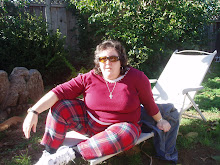
So, it's been months since I've entered a posting but I have a few good reasons, the first and foremost being LIFE. It's been wonderful living with my guide dog, Verona (Ro for short), and Neeka, our pet dog.
It wasn't all peaches and cream when we got back from training, though, but since then we've all adjusted quite well. If I knew how hard it would be to manage both my dogs after guide dog school, I might have prepared better for it. As it happened, I had a hard time seperating from Neeka. I missed her while I was away and even after bonding with Ro in school, I worried if she was pining for me. She was, after all, a rescue and I was her primary caregiver. Mommy was away and she didn't know why.
My husband told me that Neeka slept by the front door waiting for me. That broke my heart when I heard it I wished there was some way I could tell her why I was gone and that she wasn't being abandoned. But I couldn't and just had to let it go.
I had to let go of many thingsduring my journey into blindness and have since learned to try to do my best to know when to release whatever was out of my control. Giving up my role as primary caregiver of Neeka was just another role I had to find a way to revamp. Luckily my daughter took over while I was gone and she and Neeka have since bonded.
My fear of the dark has relaxed, too, One day I went out to a meeting and returned after 8 p.m. We got off the bus and I realized this was the first night trip Ro and I were going on since the one we did in training. Ugh, I thought, this will be interesting. But I stepped out with her and we did great. My confidence is slowly being restored, thanks to Ro and her excellent guide work. She keeps me safe and every day she does something that causes me to feel grateful I have her.
One night last week we were walking down our apartment hallway and a man came out the stairway just as we were passing. He swung the door open so fast I didn't have time to react. But Ro heard him and pushed us out of the way just in time. The man barely missed us with the door and his own momentum. It was like a traffic check and I praised her as we resumed our way out of the building. If she hadn't done that, we would have both been hurt, perhaps seriously.
Sunday, May 10, 2009


Saturday, February 7, 2009
Left Foot Forward
LEFT FOOT FORWARDTwo years ago, I made the decision to apply for a guide dog. Up until that point, I was considered a high partial, i.e., having some residual vision but not enough to be reliable. Inevitably I made the transition from high partial to low partial and the decline prompted me to take an active role in applying for a dog guide. I applied to three schools and made the choice to go to Guiding Eyes for the Blind in Yorktown Heights, New York. Arrival
I am in the January 2009 class. It is cold, but training in the snow has its advantages. For instance, the natural barriers of snow mounds and sheets of ice provide us with excellent training obstacles. The freezing temperatures make it easier for the dogs to get used to the booties needed to protect their feet from ground salt. The elements helped us do better due to the challenges the weather provided. What can I say, I’m an optimist. Last night after dinner we got our leashes. The bridle leather was stiff and we were encouraged to break in the leash by bending and stretching it. I used nervous energy to do it; I didn’t have a dog on the other end yet and the expectation of the following day motivated my hands all night. The next day we were evaluated for our walking and pacing preferences. We did awkward Juno pirouettes and I even called the female trainer GOOD BOY. Thankfully she laughed.
Tomorrow we get our dogs and I am so stoked I just can’t wait.
Our class is small, only nine people total. Four women and five men. Most are retrains; one woman will be getting her seventh dog. Four of us are first-time handlers and find everything new and a little bit daunting. We have lots of information to absorb in just a month and at times it can be overwhelming. The transition from a white cane to a dog is interesting; one must first remember putting the left foot forward until it becomes ingrained in one’s muscle memory. The reason is that the left foot replaces the probing of the cane once the dog leads you to the curb. The dog interprets your body movement from its place at your left side. It reminds me of the Hokey Pokey, guide dog style. Put the left foot out, take the harness and turn it about. Anyway, I find it challenging and the more I’m holding on to the harness, the more relaxed I get.
What else so far? Overall, without exception, Guiding Eyes is a wonderful place to train; the staff is courteous and accommodating, which gives us the chance to relax and concentrate on our training so we can make our stay here as successful as possible.
Dog Day
Her name is Verona and I love her already. She is a black lab. Did I say that I love her already? She’s a bit of a soft touch. She is gentle, goofy, and has big, velvety ears that flop like Dumbo’s when she trots around during play time. When she gets really excited, she snorts like a pony. She loves to have something in her mouth and her tail wags incessantly.
She is obedient. The most amazing part of this is she forgives me when I make a mistake, like when I accidentally step on a paw. Once, I left the room for two minutes to get a drink and when I came back she was standing there, a bone in her mouth, wagging and I think I actually got a brief glimpse of her soft brown eyes and we clicked. . But that could just be my imagination; In any case, I swear it was then that our bond became firm, the mutual trust solidifying. It was the next day after a scary traffic check that I realized I would lie down and die for her, if necessary. She keeps me out of harm’s way and that deserves my complete dedication to her well being.
The First Week
6 a.m.: walk/feed/walk. Breakfast is at seven-thirty. Then we get in the vans and drive to White Plains and train until three p.m. Dinner is at Five and after our last walk at 10 p.m., I shower and fall into bed, whereupon we begin the routine at six a.m. the following day. Today is the second week and Verona and I walked our route alone. She got me safely across seven streets and wove me through pedestrian traffic, parking meters, scaffolds and snow mounds. Tomorrow we start a new route.
Week Three: Graduation
We have learned how to walk on country roads, traverse escalators, revolving doors, elevators, and stairs. We have trained in Manhattan and have taken a trip into the subway system as well as above ground trains and buses. We’ve all had the benefit of being lead successfully and safely by our dogs in shopping malls and on city streets. The freedom I experience when Verona is guiding me defies adequate words. The best I can do is say it’s exhilarating, perhaps as good as seeing again. Nothing can replace the loss of vision but the partnership and trust Verona and I share compensates for it. By having a dog guide, I’ve gained back much of my mobility lost as a cane user. For me, the dog is the way. I was never really very good with my cane. It’s an object, not a companion. I suppose it comes down to feeling better about my disability and a dog guide provides me with the companionship to help me when I need it most.
I am in the January 2009 class. It is cold, but training in the snow has its advantages. For instance, the natural barriers of snow mounds and sheets of ice provide us with excellent training obstacles. The freezing temperatures make it easier for the dogs to get used to the booties needed to protect their feet from ground salt. The elements helped us do better due to the challenges the weather provided. What can I say, I’m an optimist. Last night after dinner we got our leashes. The bridle leather was stiff and we were encouraged to break in the leash by bending and stretching it. I used nervous energy to do it; I didn’t have a dog on the other end yet and the expectation of the following day motivated my hands all night. The next day we were evaluated for our walking and pacing preferences. We did awkward Juno pirouettes and I even called the female trainer GOOD BOY. Thankfully she laughed.
Tomorrow we get our dogs and I am so stoked I just can’t wait.
Our class is small, only nine people total. Four women and five men. Most are retrains; one woman will be getting her seventh dog. Four of us are first-time handlers and find everything new and a little bit daunting. We have lots of information to absorb in just a month and at times it can be overwhelming. The transition from a white cane to a dog is interesting; one must first remember putting the left foot forward until it becomes ingrained in one’s muscle memory. The reason is that the left foot replaces the probing of the cane once the dog leads you to the curb. The dog interprets your body movement from its place at your left side. It reminds me of the Hokey Pokey, guide dog style. Put the left foot out, take the harness and turn it about. Anyway, I find it challenging and the more I’m holding on to the harness, the more relaxed I get.
What else so far? Overall, without exception, Guiding Eyes is a wonderful place to train; the staff is courteous and accommodating, which gives us the chance to relax and concentrate on our training so we can make our stay here as successful as possible.
Dog Day
Her name is Verona and I love her already. She is a black lab. Did I say that I love her already? She’s a bit of a soft touch. She is gentle, goofy, and has big, velvety ears that flop like Dumbo’s when she trots around during play time. When she gets really excited, she snorts like a pony. She loves to have something in her mouth and her tail wags incessantly.
She is obedient. The most amazing part of this is she forgives me when I make a mistake, like when I accidentally step on a paw. Once, I left the room for two minutes to get a drink and when I came back she was standing there, a bone in her mouth, wagging and I think I actually got a brief glimpse of her soft brown eyes and we clicked. . But that could just be my imagination; In any case, I swear it was then that our bond became firm, the mutual trust solidifying. It was the next day after a scary traffic check that I realized I would lie down and die for her, if necessary. She keeps me out of harm’s way and that deserves my complete dedication to her well being.
The First Week
6 a.m.: walk/feed/walk. Breakfast is at seven-thirty. Then we get in the vans and drive to White Plains and train until three p.m. Dinner is at Five and after our last walk at 10 p.m., I shower and fall into bed, whereupon we begin the routine at six a.m. the following day. Today is the second week and Verona and I walked our route alone. She got me safely across seven streets and wove me through pedestrian traffic, parking meters, scaffolds and snow mounds. Tomorrow we start a new route.
Week Three: Graduation
We have learned how to walk on country roads, traverse escalators, revolving doors, elevators, and stairs. We have trained in Manhattan and have taken a trip into the subway system as well as above ground trains and buses. We’ve all had the benefit of being lead successfully and safely by our dogs in shopping malls and on city streets. The freedom I experience when Verona is guiding me defies adequate words. The best I can do is say it’s exhilarating, perhaps as good as seeing again. Nothing can replace the loss of vision but the partnership and trust Verona and I share compensates for it. By having a dog guide, I’ve gained back much of my mobility lost as a cane user. For me, the dog is the way. I was never really very good with my cane. It’s an object, not a companion. I suppose it comes down to feeling better about my disability and a dog guide provides me with the companionship to help me when I need it most.
Friday, December 19, 2008
For the First Snowfall
Snow Plow
Prismatic chips clatter against glass frames
wind-driven, opaque collections
heaped to infinity.
Blacktop and tarmac await the scrape
As Gea tucks in sleepy grassesWith frosty, hibernate hands.
chink-a-chink
Metal dentures rumble past
chink-a-chinkchink-a-chink
Steel maw cleaves the twilight
Rows of white topped ground unmasked.
Ann Chiappetta © 1994
Prismatic chips clatter against glass frames
wind-driven, opaque collections
heaped to infinity.
Blacktop and tarmac await the scrape
As Gea tucks in sleepy grassesWith frosty, hibernate hands.
chink-a-chink
Metal dentures rumble past
chink-a-chinkchink-a-chink
Steel maw cleaves the twilight
Rows of white topped ground unmasked.
Ann Chiappetta © 1994
Sunday, November 30, 2008
Counting Down The Doggie Days of Winter
Counting Down … Guide Dog School on January 5, 2009
It’s December 1, 2008, and I’m counting the days until I report to Guiding Eyes for the Blind. It’s all I can talk about, all I want to think about, and all I can concentrate on lately. I wonder what my dog’s name will be, what training obstacles we will have, and what the other folks training at GEB will be like.
I can’t wait to meet Bev and Becky, and the trainers. I wonder how big our class will be and what the food will be like. I’m also a little nervous about how I’ll get along even though I’m not a Braille reader yet and if the training materials will be accessible to me.
My employer has been generous and cooperative in terms of my time off and returning to work. Not having to worry about the potential repercussions of leaving for a month lowers my overall worry so I can concentrate on the upcoming challenges.
As for our family, I am concerned about how we will all get along once we come back home, too. I’ve only been away from my husband and kids for a few weeks at a time and I find myself saying prayers that they will get on fine without me. I just have to believe it or my anxiety about leaving for a month will be overwhelming. Keeping this in mind, I remind everyone in the household that they will be doing the dishes, laundry, and cleaning. But I worry most about how our family dog will adjust to my absence.
Since her addition to our household, she and I have bonded and although I’ve tried to get my husband to take over her feeding and morning walks, I am still the one who gets up and does it.
I fear the the sudden change after I leave will depress her, but I have to believe that all will work out so I can do what I need to do. I’ll miss the dog as much as the kids and my husband. Maybe more.
Then there is my 13 year old daughter. She always seems to have the most trouble when I go away and I hope that this time will be different. This will be a good test for both of us in terms of separation and her determination to take good care of herself while I’m gone. I know she is very capable and strong, but I also know how much we will miss one another.
As for preparations, being mindful of the capricious January weather, I’ve purchased insulated/water resistant boots, a storm coat, gloves, and hat. I also bought a set of long underwear, just in case the wind chill is really bad on training walks. I’ve been reading the GEB’s participant manual, too, and have spoken with some folks who have graduated. The
next month will probably crawl.
So, on to the holiday season, and to waiting the day my life will change for the better when I finally meet my new partner.
It’s December 1, 2008, and I’m counting the days until I report to Guiding Eyes for the Blind. It’s all I can talk about, all I want to think about, and all I can concentrate on lately. I wonder what my dog’s name will be, what training obstacles we will have, and what the other folks training at GEB will be like.
I can’t wait to meet Bev and Becky, and the trainers. I wonder how big our class will be and what the food will be like. I’m also a little nervous about how I’ll get along even though I’m not a Braille reader yet and if the training materials will be accessible to me.
My employer has been generous and cooperative in terms of my time off and returning to work. Not having to worry about the potential repercussions of leaving for a month lowers my overall worry so I can concentrate on the upcoming challenges.
As for our family, I am concerned about how we will all get along once we come back home, too. I’ve only been away from my husband and kids for a few weeks at a time and I find myself saying prayers that they will get on fine without me. I just have to believe it or my anxiety about leaving for a month will be overwhelming. Keeping this in mind, I remind everyone in the household that they will be doing the dishes, laundry, and cleaning. But I worry most about how our family dog will adjust to my absence.
Since her addition to our household, she and I have bonded and although I’ve tried to get my husband to take over her feeding and morning walks, I am still the one who gets up and does it.
I fear the the sudden change after I leave will depress her, but I have to believe that all will work out so I can do what I need to do. I’ll miss the dog as much as the kids and my husband. Maybe more.
Then there is my 13 year old daughter. She always seems to have the most trouble when I go away and I hope that this time will be different. This will be a good test for both of us in terms of separation and her determination to take good care of herself while I’m gone. I know she is very capable and strong, but I also know how much we will miss one another.
As for preparations, being mindful of the capricious January weather, I’ve purchased insulated/water resistant boots, a storm coat, gloves, and hat. I also bought a set of long underwear, just in case the wind chill is really bad on training walks. I’ve been reading the GEB’s participant manual, too, and have spoken with some folks who have graduated. The
next month will probably crawl.
So, on to the holiday season, and to waiting the day my life will change for the better when I finally meet my new partner.
Sunday, November 23, 2008
Removal by Annie C
Removal
I am unfettered
Glass and wire left behind
forsaken
I am the sightless
I denounce frames and lenses
Like false gods
I am a disiple
fear replaced by loss understood
I am the naked prophet
disrobed
after prolonged oppression
I am baptized by blindness
dipped into the water
Fully submerged
The glasses wash away
Swept aside in the river’s current
Sins relinquished.
Like a prophet, I convert
Yet I rise -- a Lazarus
A Believer.
I wonder
If my eyes weren’t taken
would I still be the same?
2008
I am unfettered
Glass and wire left behind
forsaken
I am the sightless
I denounce frames and lenses
Like false gods
I am a disiple
fear replaced by loss understood
I am the naked prophet
disrobed
after prolonged oppression
I am baptized by blindness
dipped into the water
Fully submerged
The glasses wash away
Swept aside in the river’s current
Sins relinquished.
Like a prophet, I convert
Yet I rise -- a Lazarus
A Believer.
I wonder
If my eyes weren’t taken
would I still be the same?
2008
Saturday, November 15, 2008
The first of my blindness poems
I wrote this one last year after the retinal specialist told me the macula in both eyes was in an adbanced stage of atrpphy and it was only a matter of time before I'd lose what is left of my vision.
The purpose of expressing my personal expereince is twofold: for my own benefit and to help other folks going through something similar. So, if you know someone who might find some good from these words, please pass it on.
ORBITUARY
BY Ann Chiappetta
Old ways are replaced
like the beasts Sent to slaughter
after the invention of combustion engines.
The beloved written word
the character patterns that enthralled Have gone.
Printing press and paperback are inaccessible
thoughThe desire to hold and smell books
Put the paper close to an ear and thumb the thickness
Delight in the nose-tingling swish of air
pulpy and acridRemains
akin to a craving.
The act itself
The devouring of pages
is lost to macular degeneration
physical contact thwarted by
Blurred vision, sensory affliction
The death of an eye
The purpose of expressing my personal expereince is twofold: for my own benefit and to help other folks going through something similar. So, if you know someone who might find some good from these words, please pass it on.
ORBITUARY
BY Ann Chiappetta
Old ways are replaced
like the beasts Sent to slaughter
after the invention of combustion engines.
The beloved written word
the character patterns that enthralled Have gone.
Printing press and paperback are inaccessible
thoughThe desire to hold and smell books
Put the paper close to an ear and thumb the thickness
Delight in the nose-tingling swish of air
pulpy and acridRemains
akin to a craving.
The act itself
The devouring of pages
is lost to macular degeneration
physical contact thwarted by
Blurred vision, sensory affliction
The death of an eye
Sunday, November 9, 2008
The Search So Far
The Search for a new Partner
The definition of intelligent disobedience, in guide dog terms, is when a dog acts to protect a handler by disobeying a direct command to avoid an obstacle. This action is the alpha and omega of guide work, the ultimate test for a service animal. It is a wonder to witness, and, I suppose, even more gratifying to experience as the human part of a guide dog team.
I’m hoping to be part of one of these teams, to be able to trust my dog implicitly and without reserve. My first attempt, however, was disappointing and it’s taken years to develop the courage to try again. The truth was that I didn’t agree with the reason behind the rejection, and it rankled me to such an extent, I gave up trying. According to the evaluator, I was still too “vision dependant; imagine hearing that, after experiencing two years of declining sight, including a second round of rehab services, not to mention coping with progressive vision loss for fifteen years.
The shock of it took months to overcome and I cried every time I thought about it. As difficult as it was to take no for an answer, to process that the school didn’t feel I was an appropriate candidate, eventually my resolve returned and I decided to try again. First, I got an examination by a retinal specialist/ophthalmologist. Who evaluated my remaining vision, informing me less than five percent of it was left? After hearing this, I made up my mind to take another shot at applying for a dog. The difference was that this time I wasn’t applying without preparation. Not wanting to repeat my earlier experience, I enrolled in a new correspondence course through the Hadley School for the Blind called “Guide Dogs”. The course consisted of five lessons; a course book and a supplemental book containing vignettes about folks and their dogs. The course promised that by the time I was done, I’d know for sure if a guide dog was for me. It also prepared me for the application process, encouraging a potential handler to apply to at least three schools simultaneously and research them before asking for an application. I learned many valuable things about being part of a guide dog team through corresponding with the course instructor. She informed me that based on my course work, not only am I ready to bond with a guide dog but also my remaining vision shouldn’t present a barrier to being accepted into a school. It was my remaining vision that caused the first school to pass me over. I told her about my experience and fear of another rejection. The instructor encouraged me to find schools that trained partially sighted handlers. She informed me that I would have to agree to be blindfolded in order to foster the trust between myself and a dog. Trust is paramount to a successful team. I’d experienced this in my first home assessment. The evaluator blindfolded me and led me a few blocks. I remember thinking how wonderful it felt to finally be free, to finally relax while walking. The instructor also encouraged me to reach out to other partially-sighted handlers and I had the perfect resource for connecting with these folks. Newsreel is a monthly audio newsletter serving the blind across the US and Canada. As a subscriber, I can record my comments, requests, and helpful hints to be included in the audio tape. I sent in my request asking to hear from other folks who trained while still having some vision. I wasn’t disappointed. I received calls from folks all over the United States, all of whom had guide dogs and trained with some remaining sight. In fact, when one woman found out I was close to the school in San Rafael California, she insisted I go visit it and apply. What the heck, I said, I was already on vacation. Why not?Mom and I arrived at the school and spent about a half-hour with the admissions counselor, then took the tour. It was wonderful. The best part was finding out that being partially sighted was not a barrier to working with a guide dog. The admissions counselor did say, however, that partially sighted trainees, for the most part, did have to work harder to elicit the trust between themselves and their dog. To counteract this, the trainer would advise me to train with dark glasses to occlude my remaining sight. This would eliminate the obstacle of my vision getting in the way of allowing a dog to work and trust to be established. I’m ready for that, I said, assuring her that even my remaining sight was no longer reliable and I was ready to give it a rest. She must have thought so, too, because she gave me an application. The next six months were the most challenging part of opting to apply for a dog guide. It’s a collaboration of my information being printed on applications, of asking friends, agencies, and doctors to fill out and return forms, of hoping that when I finally do send the application, there isn’t a snag to slow it down. Soon, I tell myself, I’ll have at least one school offering to take me. But I’m still anxious that the sight I have left will be a problem. Not all impaired folks can travel confidently with a cane. I’m one of those folks. When I go out to unfamiliar places, every inch of my being is on alert and when I’m done, I am exhausted. A dog guide would help dispel some of that hyper-vigilance. I could find the bus stop without fearing the path to it. I would be able to navigate the curved paths in the park without straying off course and twisting an ankle. I’d be able to weave in and out of crowds confidently and know I wouldn’t be tapping folks with my cane. Best of all, I’d have a partner committed to helping me live and work as I liked, tuned in to not only my needs but also my moods, I currently own a dog and I honor her devotion by caring for her as best I can. I brush her teeth and coat and try to keep her on the svelte side by reminding my husband and kids not to feed her people food. I know she would love to have another dog in the house, another warm body to share the space near my chair. I’m looking forward to making it happen, too.
Resources: The Hadley School for the Blind 700 Elm Street, Winnetka, IL 60093 800-323-4238
Newsreel8 East Long Street Suite 420 Columbus OH 43215(614) 469-0700 (888) 723-8737 FAX (614) 469-7077E-mail irwin@newsreelmag.orgWebsite newsreelmag.org
The definition of intelligent disobedience, in guide dog terms, is when a dog acts to protect a handler by disobeying a direct command to avoid an obstacle. This action is the alpha and omega of guide work, the ultimate test for a service animal. It is a wonder to witness, and, I suppose, even more gratifying to experience as the human part of a guide dog team.
I’m hoping to be part of one of these teams, to be able to trust my dog implicitly and without reserve. My first attempt, however, was disappointing and it’s taken years to develop the courage to try again. The truth was that I didn’t agree with the reason behind the rejection, and it rankled me to such an extent, I gave up trying. According to the evaluator, I was still too “vision dependant; imagine hearing that, after experiencing two years of declining sight, including a second round of rehab services, not to mention coping with progressive vision loss for fifteen years.
The shock of it took months to overcome and I cried every time I thought about it. As difficult as it was to take no for an answer, to process that the school didn’t feel I was an appropriate candidate, eventually my resolve returned and I decided to try again. First, I got an examination by a retinal specialist/ophthalmologist. Who evaluated my remaining vision, informing me less than five percent of it was left? After hearing this, I made up my mind to take another shot at applying for a dog. The difference was that this time I wasn’t applying without preparation. Not wanting to repeat my earlier experience, I enrolled in a new correspondence course through the Hadley School for the Blind called “Guide Dogs”. The course consisted of five lessons; a course book and a supplemental book containing vignettes about folks and their dogs. The course promised that by the time I was done, I’d know for sure if a guide dog was for me. It also prepared me for the application process, encouraging a potential handler to apply to at least three schools simultaneously and research them before asking for an application. I learned many valuable things about being part of a guide dog team through corresponding with the course instructor. She informed me that based on my course work, not only am I ready to bond with a guide dog but also my remaining vision shouldn’t present a barrier to being accepted into a school. It was my remaining vision that caused the first school to pass me over. I told her about my experience and fear of another rejection. The instructor encouraged me to find schools that trained partially sighted handlers. She informed me that I would have to agree to be blindfolded in order to foster the trust between myself and a dog. Trust is paramount to a successful team. I’d experienced this in my first home assessment. The evaluator blindfolded me and led me a few blocks. I remember thinking how wonderful it felt to finally be free, to finally relax while walking. The instructor also encouraged me to reach out to other partially-sighted handlers and I had the perfect resource for connecting with these folks. Newsreel is a monthly audio newsletter serving the blind across the US and Canada. As a subscriber, I can record my comments, requests, and helpful hints to be included in the audio tape. I sent in my request asking to hear from other folks who trained while still having some vision. I wasn’t disappointed. I received calls from folks all over the United States, all of whom had guide dogs and trained with some remaining sight. In fact, when one woman found out I was close to the school in San Rafael California, she insisted I go visit it and apply. What the heck, I said, I was already on vacation. Why not?Mom and I arrived at the school and spent about a half-hour with the admissions counselor, then took the tour. It was wonderful. The best part was finding out that being partially sighted was not a barrier to working with a guide dog. The admissions counselor did say, however, that partially sighted trainees, for the most part, did have to work harder to elicit the trust between themselves and their dog. To counteract this, the trainer would advise me to train with dark glasses to occlude my remaining sight. This would eliminate the obstacle of my vision getting in the way of allowing a dog to work and trust to be established. I’m ready for that, I said, assuring her that even my remaining sight was no longer reliable and I was ready to give it a rest. She must have thought so, too, because she gave me an application. The next six months were the most challenging part of opting to apply for a dog guide. It’s a collaboration of my information being printed on applications, of asking friends, agencies, and doctors to fill out and return forms, of hoping that when I finally do send the application, there isn’t a snag to slow it down. Soon, I tell myself, I’ll have at least one school offering to take me. But I’m still anxious that the sight I have left will be a problem. Not all impaired folks can travel confidently with a cane. I’m one of those folks. When I go out to unfamiliar places, every inch of my being is on alert and when I’m done, I am exhausted. A dog guide would help dispel some of that hyper-vigilance. I could find the bus stop without fearing the path to it. I would be able to navigate the curved paths in the park without straying off course and twisting an ankle. I’d be able to weave in and out of crowds confidently and know I wouldn’t be tapping folks with my cane. Best of all, I’d have a partner committed to helping me live and work as I liked, tuned in to not only my needs but also my moods, I currently own a dog and I honor her devotion by caring for her as best I can. I brush her teeth and coat and try to keep her on the svelte side by reminding my husband and kids not to feed her people food. I know she would love to have another dog in the house, another warm body to share the space near my chair. I’m looking forward to making it happen, too.
Resources: The Hadley School for the Blind 700 Elm Street, Winnetka, IL 60093 800-323-4238
Newsreel8 East Long Street Suite 420 Columbus OH 43215(614) 469-0700 (888) 723-8737 FAX (614) 469-7077E-mail irwin@newsreelmag.orgWebsite newsreelmag.org
Subscribe to:
Posts (Atom)